Most travelers open a booking app, sort by price, and tap the lowest option. But the rate you see on an online travel agency (OTA) is rarely the lowest price a hotel is willing to accept. The question of direct booking vs online travel agency comes down to one thing: who keeps the commission. Once you understand that difference, you can stop overpaying for a single room.
What an Online Travel Agency Actually Costs You
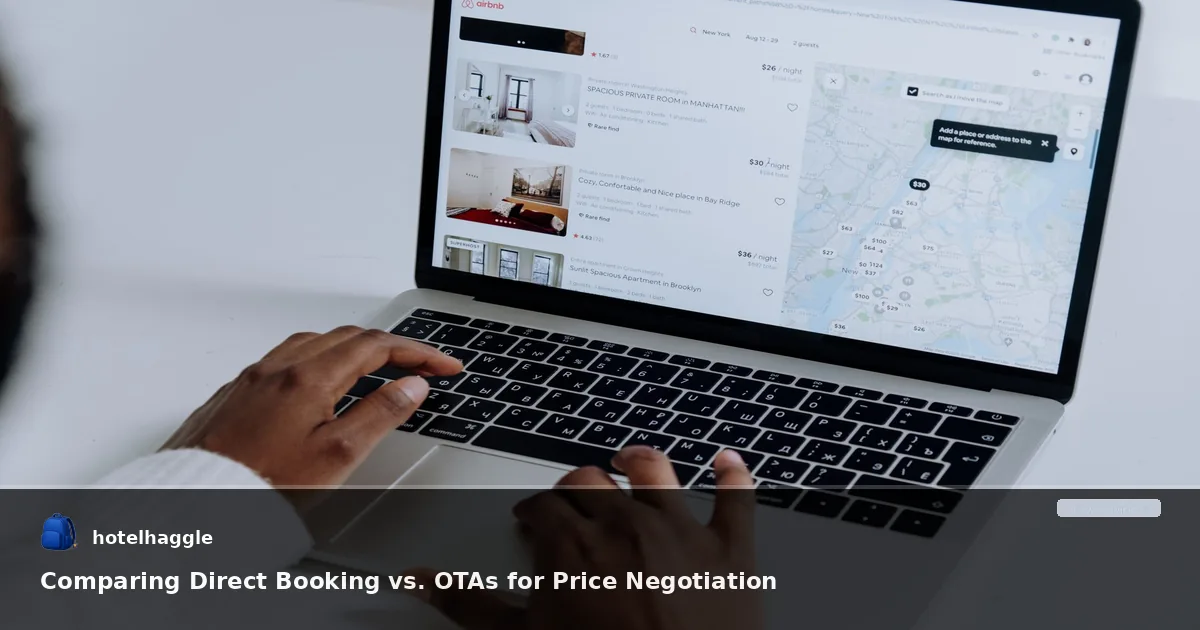
Every time you book through an OTA, the hotel pays a commission — often 15% to 30% — on that reservation. That cost never disappears; it is baked into the rate you see. A hotel that would happily sell a room for $120 directly has to list it at $140 or more on an OTA just to break even. The OTA also controls how rates are displayed, sorted, and framed, and those design choices are built to maximize the platform's margin, not your savings. Convenience, in other words, carries a hidden price tag.
Why Direct Booking Wins on Price
When you go straight to the property, the math changes. Without a middleman taking a cut, a hotel can drop the rate and still come out ahead. That is why calling the front desk or using the hotel's own site so often beats the OTA price — the hotel keeps the full revenue and has genuine room to negotiate. It is also why a revenue manager will frequently match or beat a competing rate when a guest simply asks. Direct booking puts the margin back on the table, where a smart negotiator can capture it.
The Catch With Calling the Hotel Yourself
Direct booking sounds great until you try to do it at scale. Calling ten hotels means ten phone calls, ten hold queues, and ten separate conversations where you are guessing at what a fair price even is. You have no leverage, no side-by-side comparison, and no easy way to make one hotel compete against another. That is the real tension in the direct booking vs online travel agency debate: going direct saves money but costs time, while OTAs are convenient but expensive.
Direct Booking vs Online Travel Agency: The Middle Ground
There is a third option that keeps the best of both approaches. Instead of calling hotels one by one, you name your price for a single room and let hotels come to you. You skip the OTA commission entirely — hotels respond directly to you — and you avoid the phone-call marathon, because one request reaches multiple properties at once. Hotels compete for your stay, and you compare the offers side by side before you commit to anything.
How to Name Your Price for a Single Room
The process mirrors everything that makes direct booking cheaper, minus the friction:
- Pick your city and dates. Tell the platform exactly where you are headed and what you are willing to pay for one room.
- Hotels respond. Properties that can meet your number reply with competing offers for your stay.
- Compare and commit. Review the rates and accept the one that fits your trip best.
This is single room price negotiation only — no group bookings, no room blocks, and no day-use requests. You are negotiating for exactly the room you need on exactly the nights you need it, which keeps every offer clean and comparable.
Why Hotels Say Yes to a Lower Direct Rate
Hotels are not doing you a favor when they accept a lower direct price — they are doing the math. An occupied room at a negotiated rate still beats an empty room at the posted rate. When you skip the OTA, the hotel keeps more of every dollar, so a discount to you is often still more profitable than an OTA booking at full price. That alignment is why naming your own price works, and why hotels compete for the chance to fill your room.
Stop Paying the OTA Markup
The next time you are weighing direct booking vs online travel agency, remember the commission comes out of your pocket either way. If you want the convenience of an OTA without its markup, learn how to negotiate hotel prices and start naming your own rate. Ready to see how low hotels will actually go? Bid on hotel rooms for your next trip and let hotels compete for your business — you keep the savings, not the middleman.